

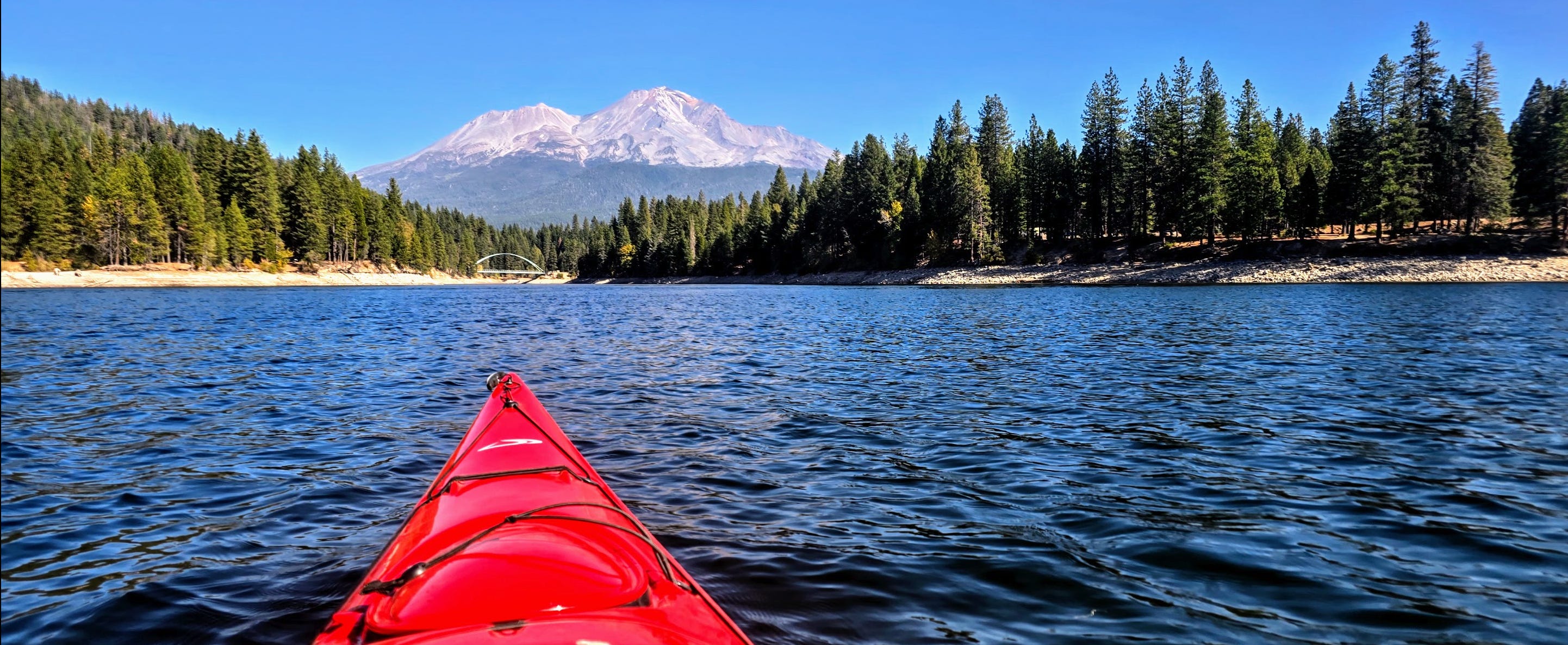
Welcome to the third edition of Three Threats Thursday. As I wander through the West, I am constantly in awe of the beautiful landscapes on our public lands. This week’s photo is of Mount Shasta, and one I took while kayaking in a nearby lake.
There are seemingly no limits to what Special Interests will do to take advantage of your public lands. In the current free-for-all attempts to abuse them, the Senate will be voting on bills that would prevent future more conservation-oriented bills from rolling back rushed destructive projects in areas like Grand Escalante Staircase.
They are attempting to do this while your eyes are diverted to the daily craziness of American politics. Don’t let them do this. If you care about your pubic lands being available for fishing, hunting, boating, hiking and more .. take action.
🔴 The Big One: A Senate bill that could lock in the damage
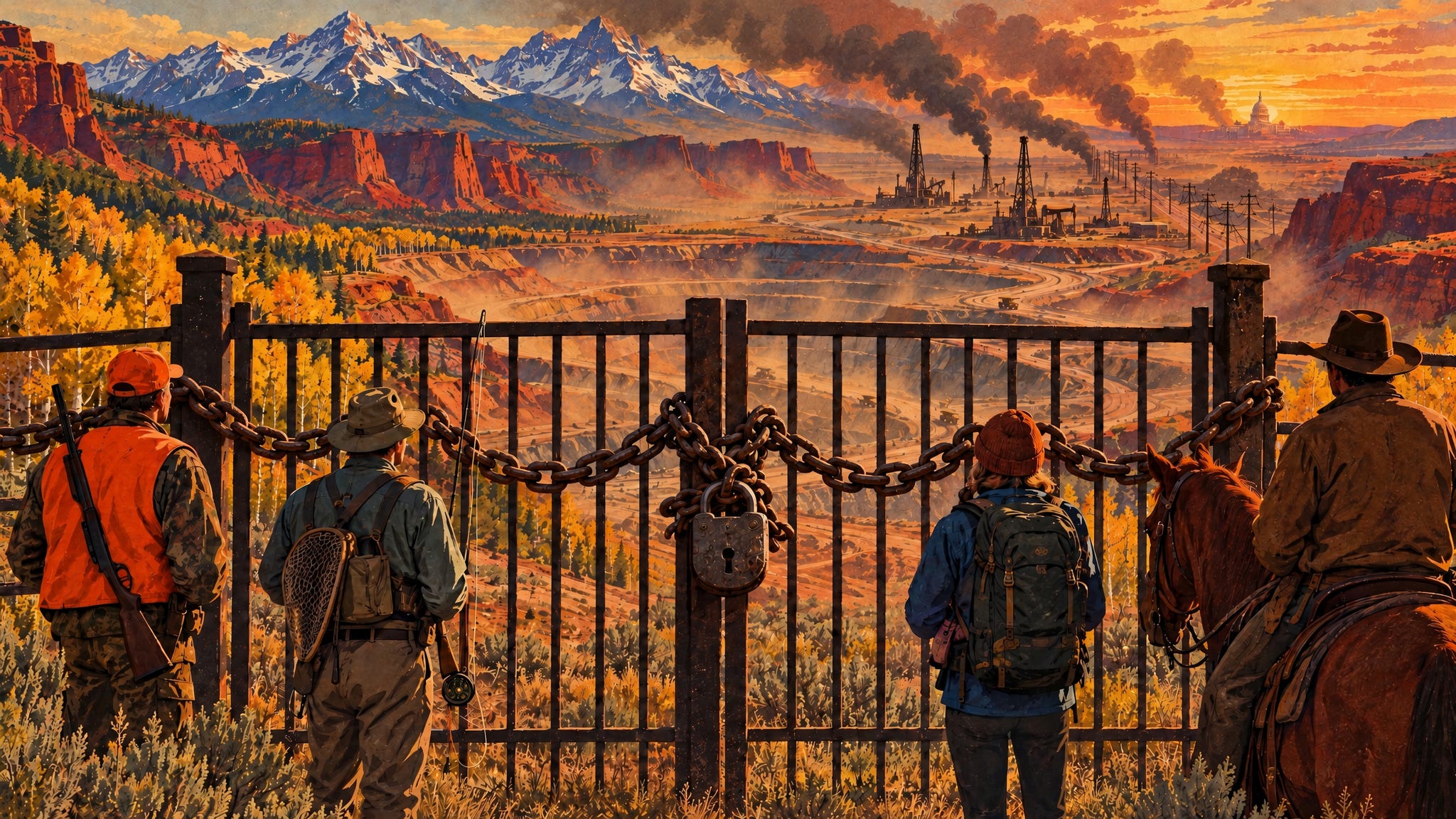
Where: The U.S. Senate, with every acre of federal public land at stake. The bill is S. 5653, the Bipartisan American Affordability and Jobs Act, from Sens. Capito (R-WV), Lee (R-UT), Whitehouse (D-RI), and Heinrich (D-NM).
What’s happening: This 417-page bill rewrites the National Environmental Policy Act, the Endangered Species Act, the National Historic Preservation Act, and mining law in one package. The Senate’s first procedural vote is set for Monday, Nov 9, right after the election, when the senators come back.
Why it matters: Three sections stand out, according to The Wilderness Society’s analysis:
Section 1401 locks permits in. Future administrations couldn’t act on permitted projects, even ones approved unlawfully. That would entrench drilling and mining in places like Bears Ears, Grand Staircase-Escalante, the Boundary Waters, and the Arctic.
Section 2215 is a mining giveaway. Companies could occupy public land for waste dumps and infrastructure without valid mineral rights, without paying royalties, and without rigorous review. That shuts out the hunters, anglers, hikers, and riders who use that ground now.
Section 1402 blocks a timeout. Developers could sue when approvals “take too long,” which could stop any future pause on things like data centers on public lands.
It also weakens public comment and tribal consultation and limits challenges in court. In other words, it narrows the very tools this newsletter asks you to use every week.
A fair note: This bill is bipartisan, and some clean-energy groups and unions support it, because it would also speed up power lines and renewable projects. The ask here isn’t “kill permitting reform.” It’s “don’t trade away public lands to get it.”
Deadline: The first vote is Monday, Nov 9. Call before then.
Take action (2 minutes): Call your two senators through the Capitol switchboard at (202) 224-3121, or look up their direct lines. Say: “I’m a constituent from [town]. Please oppose the permitting bill, S. 5653, unless Sections 1401, 1402, and 2215 are removed. Our public lands shouldn’t be locked into drilling and mining for good.”
Group fighting this: The Wilderness Society has published its six concerns and is calling on Congress to fix them.
⏰ Closing Soon: Logging Fall Creek, where Oregon’s spring Chinook are already struggling
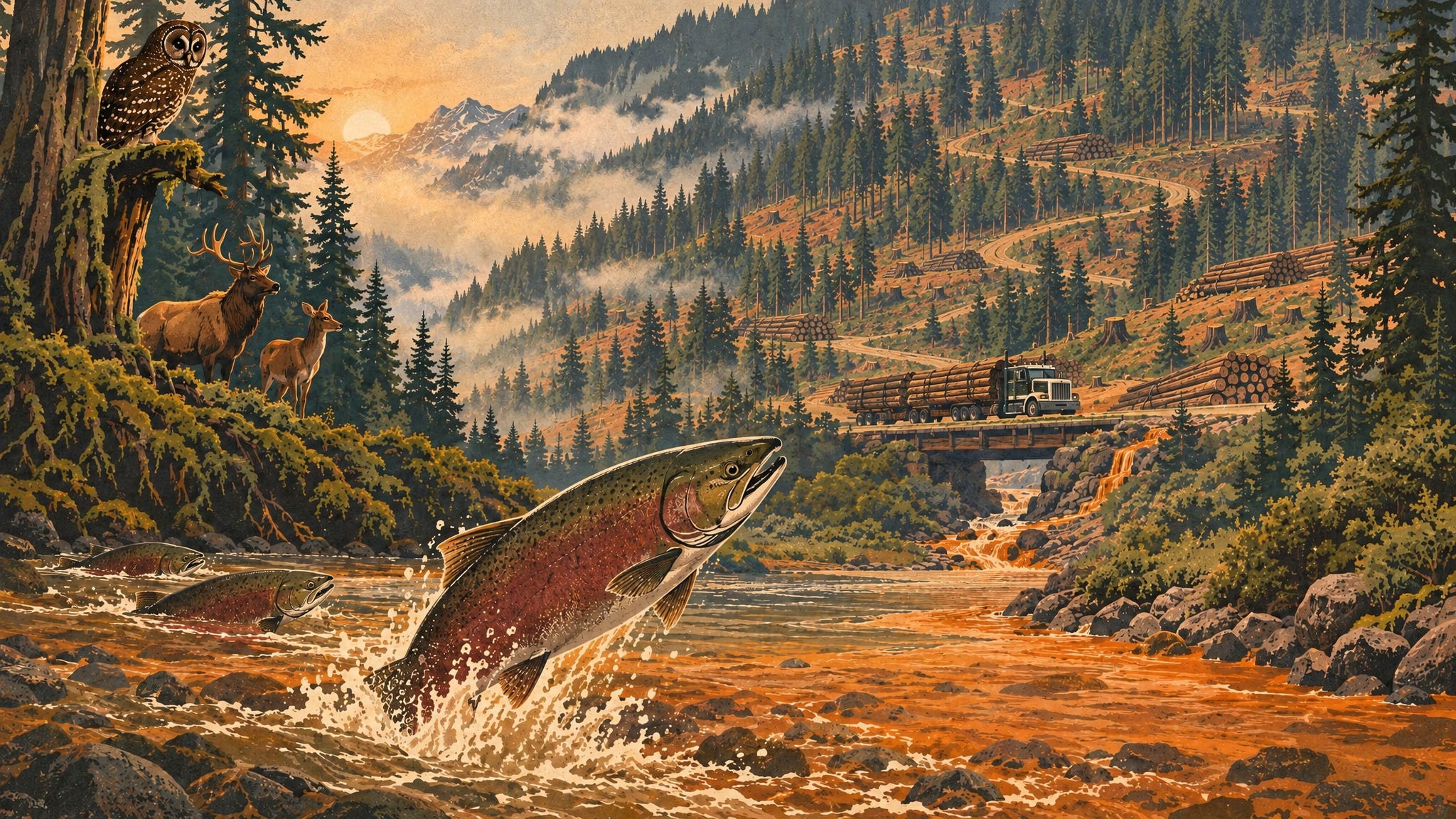
Where: Fall Creek watershed, Middle Fork Ranger District, Willamette National Forest, east of Eugene, Oregon
What’s happening: The Forest Service wants to commercially thin 11,906 acres and sell about 190 million board feet of timber in up to 20 sales over roughly a decade. Logs would be hauled over 325 miles of road, including in the wet season, with about 21 miles of new temporary road. Most of the logging (8,649 acres) is in Late-Successional Reserves, the forest set aside to grow back into old growth.
Why it matters: Anglers, first. Fall Creek and two tributaries are already listed as too warm for fish year-round. About 65 percent of threatened spring Chinook die there before they can spawn, and the agency’s own analysis says the project is likely to harm them. Hunters next: across 11,906 acres of logging and 325 miles of haul road, the document never analyzes deer or elk forage, cover, or disturbance. And 63 spotted owl home ranges overlap the project, with most location data dating to surveys from the 1990s.
A fair note: This is thinning of 42- to 79-year-old plantations, not clear-cutting old growth, and the agency’s own modeling shows the thinned trees would grow faster. The ask isn’t “no.” It’s “protect the salmon and study the game before you sign.”
Deadline: Wednesday, Oct 28
Take action (2 minutes): Ask the Forest Service to limit log hauling near the Chinook streams to the dry season, to estimate how much sediment the haul would add to these already-stressed creeks, and to analyze deer and elk habitat before any decision.
Groups working on this: I couldn’t find a group with a public campaign on Fall Creek yet. If you fish or hunt the Middle Fork and know who’s on it, reply and tell me.
📍 From the Field: The Grand Canyon’s North Rim
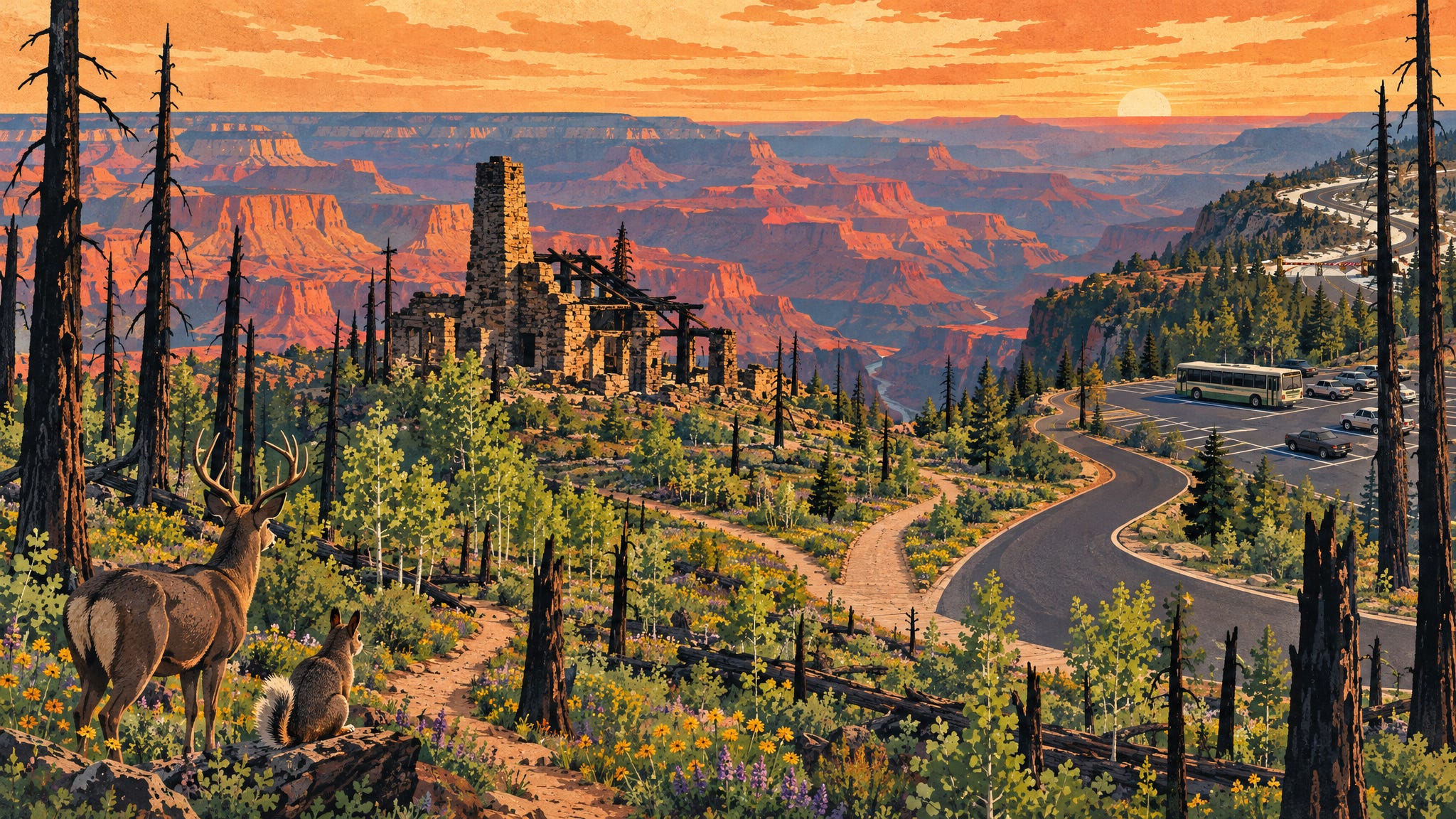
Where: Grand Canyon National Park, North Rim, Arizona, on the Kaibab Plateau
What’s happening: A wildfire burned about 71,130 acres of park land and destroyed about 106 of the North Rim’s 229 structures, including the historic Grand Canyon Lodge. Now the Park Service is choosing how to rebuild, and it has put out three concepts:
Concept A: keeps today’s season, about May 15 to Nov 30
Concept B: stretches it to about April 1 to Jan 5
Concept C: opens year-round, with more lodging, camping, and buildings, and a shuttle from a park-and-ride for much of the rim
Every concept moves the North Kaibab Trailhead to CC Hill and paves a new parking lot there. None of them says how big it would be.
Why it matters: The North Rim has always been the quiet side of the canyon. The park’s own plan says it should stay “low-key and uncrowded,” yet Concept C is built to add capacity. Concepts B and C would bring winter traffic to a plateau where Highway 67, the only paved road in, is closed in winter, and none of the materials says what keeping it open would cost wildlife. Rim-to-rim hikers, backpackers, and the hunters and wildlife watchers who know the Kaibab Plateau all have a stake. And the Park Service plans to study environmental effects only after it narrows the concepts. Comments now can keep all three options on the table until the effects are known.
A fair note: The North Rim has to be rebuilt, and more access helps some visitors and local businesses. The ask is “rebuild what was lost, keep it quiet, and show us the full footprint before you choose.”
Deadline: Friday, Nov 6
Take action (2 minutes): Tell the Park Service the North Rim should stay low-key and uncrowded, and ask it to compare all three concepts side by side in its environmental review, including the CC Hill parking lot and what winter access would require → Comment on the North Rim rebuild (or go straight to the Park Service comment page)
Groups working on this: I haven’t found a group with a public campaign on the rebuild yet. If you know who’s speaking up for the North Rim, reply. I’d like to feature them.
Last week, you showed up
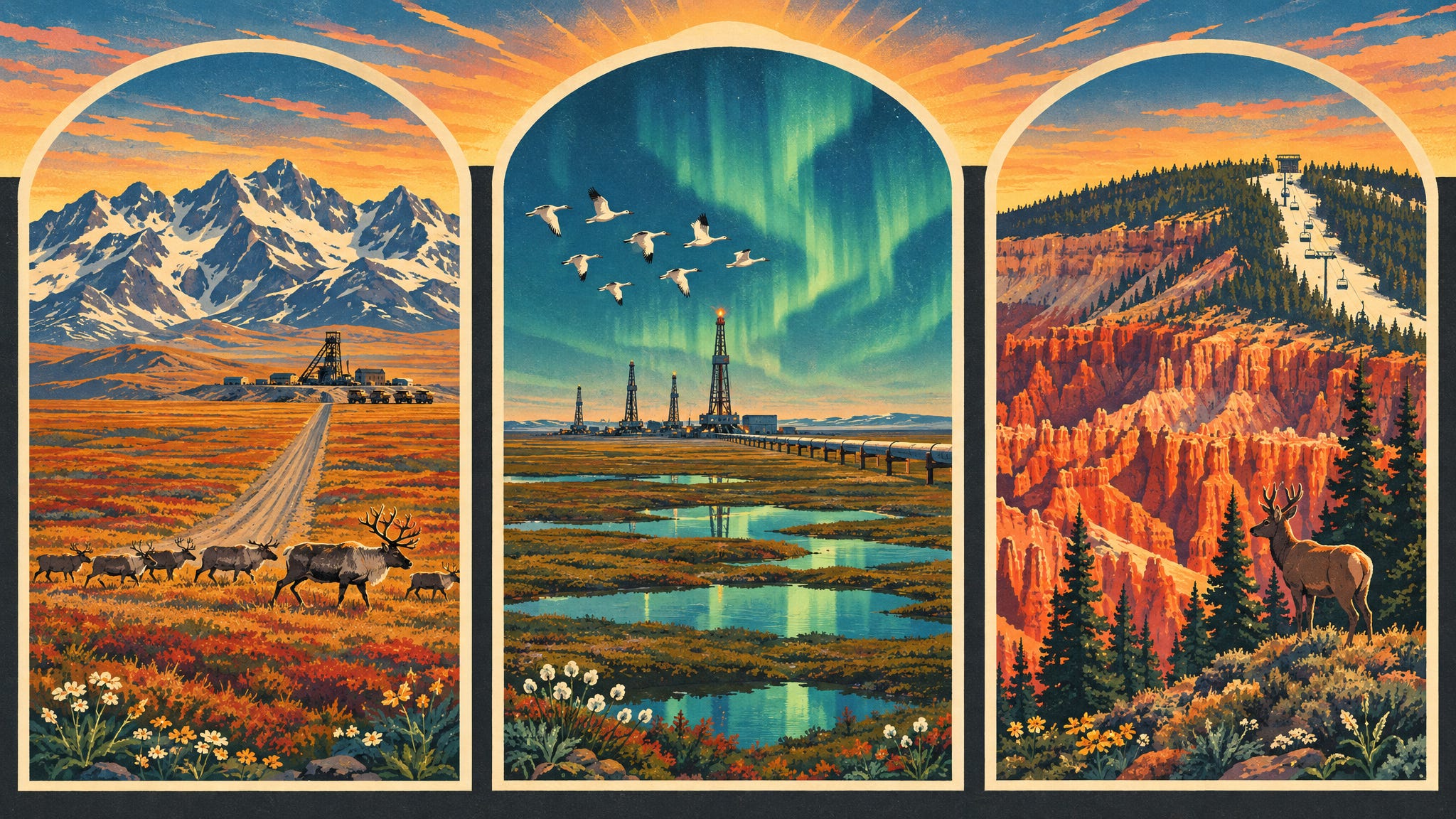
The Deschutes geothermal window closed Monday. Three fights from earlier issues are still open if you missed them:
⛏️ The first mine on Alaska’s Ambler Road, due Nov 2 → Comment on the Arctic mine
🛢️ Alaska’s NPR-A drilling fast lane, due Nov 9 → Comment through PLAN, or send Earthjustice’s version, which goes straight to the official docket
🦌 Brian Head ski expansion next to Cedar Breaks, Utah, due Oct 29 → Comment on Brian Head
Pass it on
Know a hunter, angler, hiker, or rider who’d do one thing a week for public lands? Forward this email. It’s free, and it takes ten minutes a week.